
In May 2026, Rīgas Mākslas un mediju tehnikums (RMMT) organised a ShiftVET A2.2 Practical Class in Riga, Latvia, giving students direct experience with some of the key technologies shaping the future of manufacturing and vocational education.
The training involved 10 students and 2 teachers who participated in a structured series of practical activities focused on 3D printing, 3D scanning and CNC machining. The objective was to provide learners with hands-on experience while developing their understanding of complete digital production workflows.
A particularly interesting aspect of the practical class was the use of a traditional hand-carved acanthus moulding as the basis for the learning process. Students first captured the object using a 3D scanner, then prepared and produced a 3D-printed prototype, and finally recreated the component through CNC machining. This workflow demonstrated how traditional craftsmanship can be combined with modern digital technologies to create accurate and repeatable manufacturing processes.
Participants worked with professional equipment, including 3D printers, scanning software, CNC machinery and specialised design applications. Through these activities, students gained practical experience in digital modelling, object digitisation, machining preparation and manufacturing operations.
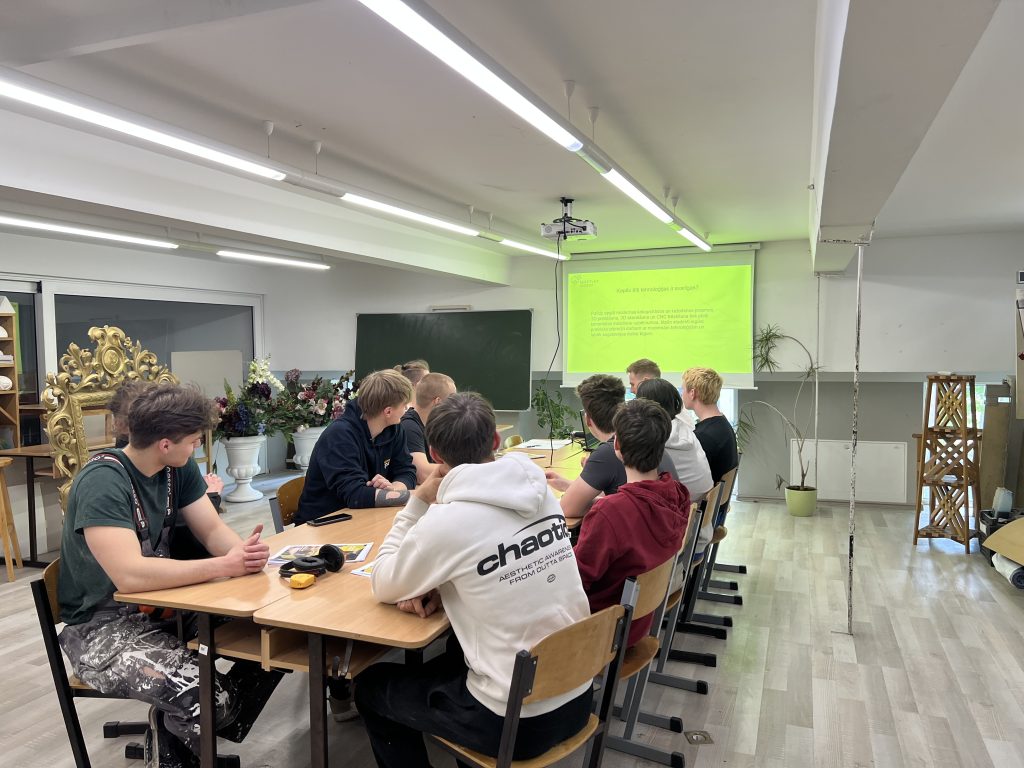
Feedback collected after the training showed a high level of satisfaction. Among the three technologies, 3D scanning was identified as the most interesting activity by most participants, while CNC machining was considered both the most challenging and the most useful exercise due to its direct relevance to industrial production.
Students particularly valued the practical and interactive nature of the sessions, although some suggested allocating additional time for advanced tasks and software familiarisation. Overall, the exercises helped improve confidence, technical understanding and awareness of modern manufacturing technologies.
The practical class successfully demonstrated how ShiftVET supports the development of future-ready skills by combining traditional woodworking knowledge with innovative digital tools, helping vocational learners prepare for the evolving needs of the wood and furniture sector.