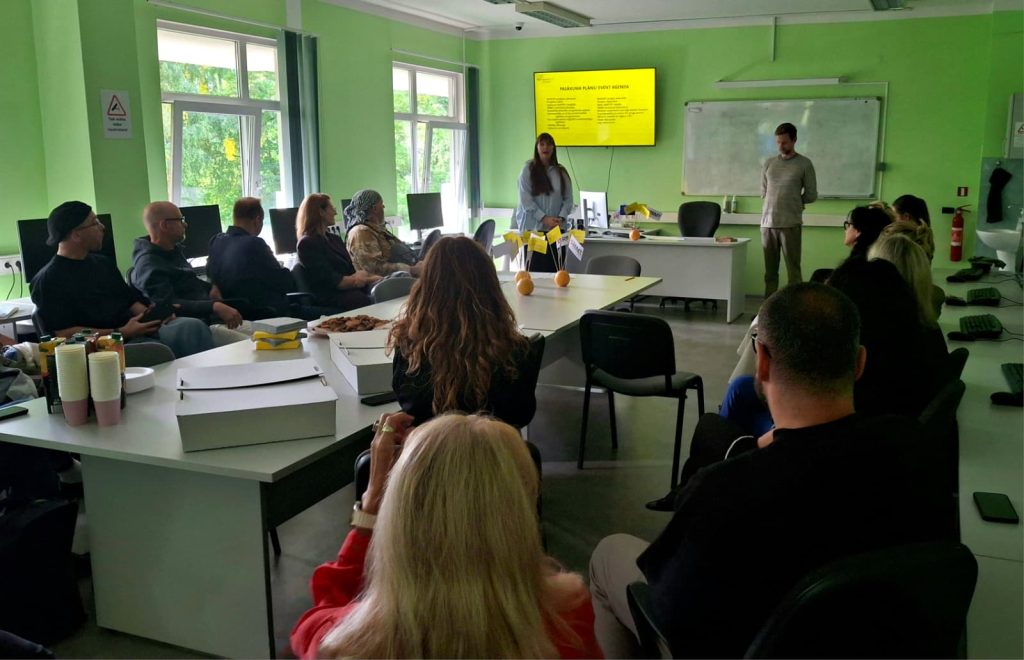
On 16 September 2026, Riga Art and Media School (RMMT) hosted a ShiftVET dissemination event in Riga, Latvia, as part of Activity A3.3. The two-hour event brought together 30 participants from different educational and professional backgrounds to share the main results of the project and discuss the practical integration of digital technologies in Vocational Education and Training.
The event combined an introduction to ShiftVET and its objectives with examples drawn from RMMT’s practical experience during the project. Particular attention was given to 3D printing, 3D scanning and CNC technologies, including their application in vocational education and their potential transfer to other study programmes.
Participants were introduced to several of the main ShiftVET results, including the technology guides, training exercises and open repository, practical implementation activities and student projects. RMMT also presented its experience of applying the ShiftVET approach within its Product Design (3D Forms) programme, showing how the methods and resources developed by the project can be transferred beyond the woodworking field.
The event gathered a diverse group of stakeholders, including thirteen VET trainers and teachers, six VET providers and management staff, five education experts, two students, two industry representatives and two other stakeholders.
An important part of the session was dedicated to open discussion. Participants exchanged experiences regarding the technologies, equipment and software available in their institutions, as well as the main challenges involved in introducing and maintaining digital manufacturing technologies. Limited teacher time, differences in available equipment, software-related difficulties and the cost of maintenance and upgrades were among the barriers identified.
The discussion also highlighted the importance of providing teachers with accessible learning materials, practical training opportunities and sufficient technical support. Participants stressed that teachers need not only to know how to operate digital equipment, but also to understand how these technologies can be meaningfully incorporated into practical teaching.
Another key conclusion concerned the relationship between digitalisation and traditional skills. Participants agreed that technologies such as CNC machining can support tasks such as producing basic forms, prototypes, templates or repeated elements, but should complement rather than replace craftsmanship, manual skills and professional judgement.
The feedback collected during the event will contribute to the finalisation of the ShiftVET Implementation Guide, helping to transform the experience gained throughout the project into practical recommendations for other VET institutions interested in integrating digital technologies into their programmes.
The event in Riga therefore marked an important step in the final phase of ShiftVET, supporting the transfer of project results and encouraging continued exchange on how digital manufacturing technologies can be effectively integrated into vocational education.